




This form collects and stores the information provided by you, so that we can contact you about your requirements. Please read our privacy policy for full information on how we manage and protect your submitted data.
We use cookies and similar technologies to improve your experience, analyse site usage, and support advertising and personalisation. Find Out More
Wondering what kind of homes are available to buy in Barking? If so, this guide’s for you.
Barking sits at a distinctive crossroads in the East London property market: a borough with some of the lowest average house prices in the capital alongside one of the most active development pipelines anywhere in London.

The housing stock reflects several distinct phases of building activity, from late Victorian terraces laid down when the railways arrived, through large-scale inter-war and post-war council building, to an accelerating wave of new residential schemes reshaping the town centre and surrounding estates. That combination makes Barking genuinely varied in what it offers buyers at different budgets.
For buyers priced out of neighbouring Stratford, Forest Gate, or Ilford, Barking is a practical alternative with a direct Overground and District line connection. The area attracts first-time buyers, investors drawn by relatively low entry prices, and families looking for more floor space than inner East London typically delivers. Understanding what the stock actually looks like, and what to check before committing, is the purpose of this guide.
| Property Type | Typical Period | Typical Tenure |
|---|---|---|
| Victorian terrace | 1880s–1900s | Freehold |
| Inter-war semi-detached | 1920s–1930s | Freehold |
| Post-war council-built (ex-RTB) | 1950s–1970s | Freehold |
| Purpose-built flat (older blocks) | 1960s–1980s | Leasehold |
| New build flat / apartment | 2010s–present | Leasehold |
| New build house / townhouse | 2010s–present | Freehold / Leasehold |
The streets immediately surrounding Barking town centre, and stretching towards Upney and Becontree Heath, contain the most concentrated Victorian and Edwardian terrace stock, built from the 1880s through to around 1910.
Our team of experts is here to help in answering any query you may have.
Characteristics:
The Victorian stock closest to Barking station has seen more modification than streets further out: original features survive in greater numbers on quieter residential roads away from the town centre. Buyers specifically seeking original sashes, cornicing, and dado rails should inspect carefully before assuming these are present.
Gardens and parking: Victorian terraces almost universally have a rear garden, typically 8–14 metres in length, and a small front forecourt. Most front gardens have been hard-surfaced for bins or informal parking, with the original low brick wall or iron railing gone. Rear gardens on terrace plots are generally usable but not large. These streets, particularly close to the town centre, are more likely to rely on on-street parking than off-street provision.
A significant portion of Barking’s residential streets were developed during the 1920s and 1930s, partly driven by the expansion of the District line and the growth of the Becontree Estate in neighbouring Dagenham. These properties tend to be noticeably larger than their Victorian predecessors.
Characteristics
Internal layouts are generally well-proportioned. The main risk is unmodified wiring and plumbing on properties that have not been substantially updated since original construction.
Gardens and parking: Inter-war semis offer more generous outside space than Victorian terraces: rear gardens are longer, and many plots have a driveway to one side providing off-street parking. These are among the more practical layouts for families.
Barking and Dagenham built extensively in the post-war decades, and a proportion of that stock has passed into private ownership through Right to Buy. Ex-council houses, typically 1950s to 1970s in build date, are solid and spacious but often differ in external finish from privately built contemporaries.
Characteristics
These can represent good value but warrant careful survey attention.
Gardens and parking: Post-war council-built houses typically have both front and rear gardens, often larger than private-sector contemporaries of the same era, and the rear garden on some estate layouts is generous. Off-street parking is available on many plots.
Purpose-built flats in Barking range from 1960s and 1970s low- and medium-rise blocks to newer apartment schemes (see New Build Flats, Apartments & Townhouses, below). Older blocks are typically leasehold with long leases, though buyers should verify remaining lease length and service charge structure carefully.
Gardens and parking: Purpose-built flat blocks, whether older or newer, generally provide communal amenity space rather than private gardens. Buyers for whom private outside space is a priority should focus on the terrace and semi-detached stock rather than the flat market.
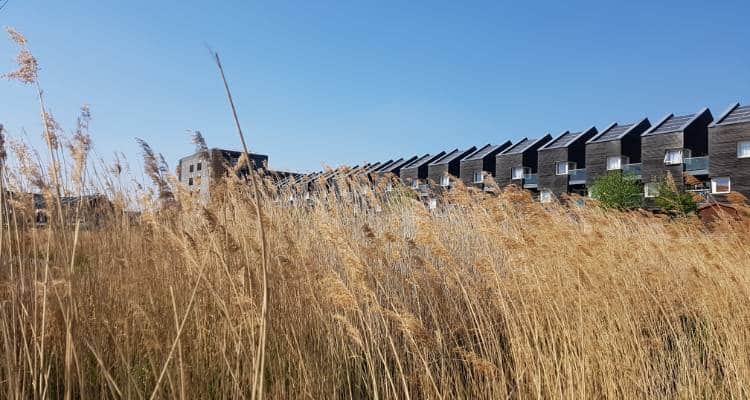
Newer apartment schemes have appeared around Barking town centre and along the A13 corridor over the past decade, alongside new build houses and townhouses on some of the borough’s larger development sites (see Recent Developments & New Builds, below). Newer developments generally offer better insulation and EPC ratings than older stock, often with communal amenity space and allocated parking. Tenure varies by scheme: flats and apartments are typically leasehold, while houses and townhouses may be sold freehold or leasehold depending on the development.
Gardens and parking: Balconies are present on some newer apartment schemes but are not universal, and private garden space remains more the exception than the rule across new build flats and apartments.
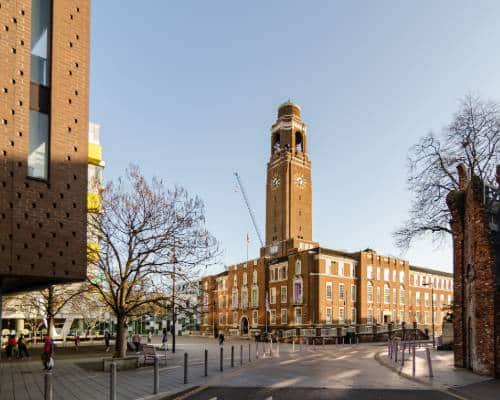
Barking town centre contains a small number of designated conservation areas and listed structures, principally focused on the historic core around Barking Abbey and the town’s medieval street pattern.
For buyers purchasing within or adjacent to a conservation area, permitted development rights are curtailed: changes to windows, doors, roof materials, and external cladding typically require planning permission rather than being permitted as of right. This is worth confirming with the London Borough of Barking and Dagenham’s planning department before purchase.
Outside the conservation core, the majority of Barking’s residential streets carry no special designation, and standard permitted development rules apply.
Barking is one of the more active development locations in East London. The most significant current schemes include:
The council is one of London’s most active local authority housebuilders, having delivered a significant share of all new council housing in the capital over recent years (London Borough of Barking and Dagenham, 2025). The net effect for buyers is a market that will see continued supply additions, particularly at the affordable and mid-market price points.
Barking’s dominant property types, solid-wall Victorian terraces and inter-war semis, carry specific survey considerations that buyers should address before exchange.
Commission a full RICS Level 3 Building Survey on any Victorian or older property; a Level 2 is likely insufficient for solid-wall construction or properties with significant extensions.
If you’re looking for property in Barking, Sandra Davidson are the local experts who can help – if you’re looking to buy or rent, you can search our properties or register on our website for updates on the latest properties that come to market. Equally, you can use our Barking Guaranteed Rent Service as a landlord if you’re looking for an easier way to let in the area.
Victorian and Edwardian terraces make up a large share of the private housing stock, particularly close to the town centre and Upney. Inter-war semis are prominent across much of the wider residential area, and there is a significant stock of ex-council houses from the post-war decades alongside a growing number of new build apartments around the town centre.
Yes. The town centre conservation area covers the historic core around East Street, the Broadway, and the abbey ruins. Within designated areas, permitted development rights are reduced and external alterations typically require planning permission from the London Borough of Barking and Dagenham.
Houses are generally freehold. Flats, whether in older purpose-built blocks or newer developments, are typically leasehold. Buyers should check lease length, ground rent terms, and service charge history carefully before proceeding, as these vary significantly between blocks.
The most important considerations are damp in solid walls, chimney condition, flat-roof extensions, and the state of the electrical installation. Older wiring and unlined flues are common on properties that have not been substantially updated. A full RICS Level 3 Building Survey is the appropriate starting point.
Barking is one of the most active development locations in East London. The Gascoigne Estate regeneration will deliver over 1,500 homes, and further large schemes are progressing through the planning system. Buyers near active or proposed development sites should review the London Borough of Barking and Dagenham’s Local Plan and check site-specific planning history before exchanging contracts.
I began as a junior apprentice in a corporate estate agents in 2006 have been working in the property sector since, so over 14 years of experience. I have worked in a range of industries from Property sales and lettings, to construction, development, commercial sales and lets as well as facilities management and maintenance. I have a degree in Economics, enjoy keeping fit and healthy, support Man Utd and have a young family.
Barking may be one of London’s most affordable boroughs, but choosing the wrong street could cost you tens of thousands of pounds – and leave you in a location that feels nothing like what you envisioned. From the wide, tree-lined Edwardian streets near Barking Park to the ambitious Riverside development and the Gascoigne regeneration zone, the borough contains multitudes. This guide breaks down exactly which streets command a premium, which overlooked pockets offer genuine opportunity, and what’s driving prices across every corner of Barking.
Barking is one of London’s most overlooked addresses – and that may not last much longer. With a £multi-billion regeneration underway, record school results, and Zone 4 prices that still make the numbers work, it’s attracting first-time buyers, young families, and savvy investors alike. But is it right for you? Our complete area guide covers transport links, schools, property prices, green spaces, and the honest challenges – everything you need to decide.
Is Romford London’s Best-Value Commuter Town?
Fast Elizabeth line connections, average property prices well below inner east London, and a formally adopted regeneration masterplan – Romford is making a compelling case for buyers, renters, and investors alike. Whether you’re a first-time buyer weighing up affordability, a commuter calculating journey times to Canary Wharf, or a landlord eyeing consistent rental demand in a growing population centre, this comprehensive area guide covers everything you need to know before making your move.
This form collects and stores the information provided by you, so that we can contact you about your requirements. Please read our privacy policy for full information on how we manage and protect your submitted data.