




×

Living in Barking: The Complete Area Guide

Barking sits in the London Borough of Barking and Dagenham, roughly ten miles east of the City, and it is changing faster than almost anywhere else in the capital.

A town with a long industrial past and a well-established town centre, it is now the focus of one of London’s most significant regeneration programmes: Barking Riverside, a 443-acre site consented for up to 20,000 new homes on the north bank of the Thames. That scale of investment reshapes a place, and Barking is in the middle of that process.

Concise-guide-to-barking-in-london

The people drawn here tend to be those who prioritise value, access, and space over postcode prestige. Barking’s population is young, with a median age of 32.9 years, and children make up roughly 24% of the borough’s residents, the highest proportion of any local authority in England and Wales (ONS, 2024). That demographic profile says something about who is already here, and who tends to follow.

Why Live in Barking?

The clearest argument for Barking is affordability relative to the rest of London at Zone 4 prices. Buyers and renters who need genuine London connectivity but can’t absorb Zone 2 or 3 costs find Barking makes the numbers work in a way that few comparable locations still do.

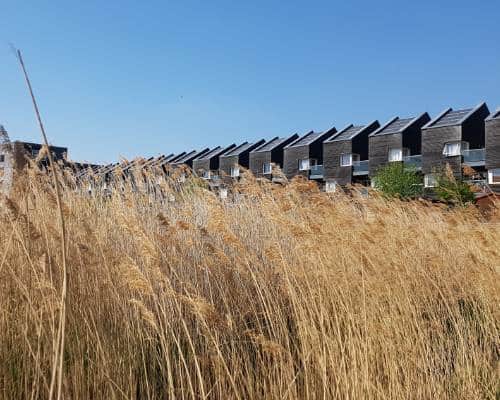
Beyond price, Barking has a functional, well-connected town centre with a busy market, a broad retail offer, and direct rail and Underground access into central London. The Barking Riverside development is adding parks, schools, a health facility, and riverfront access to the east of the town, expanding what the area offers in practical terms rather than simply increasing housing density.

Got a
Question?

Our team of experts is here to help in answering any query you may have.

The borough has also ranked top in London for secondary school allocations, with pupils consistently receiving their first-preference school (London Borough of Barking and Dagenham, March 2026), and GCSE results across borough schools reached record levels in 2026. For families with children approaching secondary age, that is a concrete advantage.

Who Is Barking Best Suited To?

Buyer or tenant typeBest suited becausePotential drawback
First-time buyersRelatively lower entry prices for Zone 4; new-build stock at Barking RiversideSome areas still require more development and investment
Young familiesStrong school allocation record; large family housing stock; growing green spaceLimited high-end leisure options compared to inner London
Landlords and investorsStrong rental demand from young working population; Barking Riverside driving long-term capital storyHigher-risk market and (potentially) lower capital growth
Commuters priced out of inner LondonZone 4 pricing with C2C and District line access; direct services to Fenchurch StreetTown centre retail and food offer is small scale rather than a destination in its own right
Tenants on tighter budgetsOne of the more affordable rental markets in Greater LondonSome areas score poorly on deprivation indices; public services under financial strain

Barking is less obviously suited to buyers seeking a settled, established neighbourhood with a mature independent food and retail scene. That offer exists in parts, but it is not the primary draw. The area rewards those who are willing to buy into a place mid-transformation rather than after it.

Barking Property Market & Prices

Barking’s housing stock spans a wide range: Victorian and Edwardian terraces close to the town centre, mid-century council-era semis and flats across the wider borough, and a fast-growing supply of new-build apartments and houses at Barking Riverside. The Riverside development alone is consented for up to 20,000 homes, with more than 4,000 designated as affordable, and construction is continuing into 2026 with the next major phase (plot 210) under way (Barking Riverside Limited, 2026).

According to HM Land Registry data, Barking and Dagenham consistently records some of the lowest average sold prices of any London borough, making it one of the few places in the capital where detached and semi-detached houses remain within reach of buyers on average London salaries. Flats, particularly new-build, dominate the Riverside area, while the older town centre streets offer terraced houses at materially lower prices per square foot than equivalent stock in neighbouring Newham or Redbridge.

For a closer look at property types, architectural character, and the specific streets where stock is strongest, see the companion Barking Property & Architecture guide and Key Streets & Locations in Barking guide.

Transport in Barking

Barking is well served for a Zone 4 location. The town sits at the junction of two Underground lines and has direct rail services into the City, making it genuinely competitive on commute times.

ModeRoute / LineApproximate journey time
London UndergroundDistrict line to Westminster35 minutes
London UndergroundHammersmith & City line to Liverpool Street25 minutes
National Rail (c2c)Barking to Fenchurch Street20 minutes
London OvergroundBarking to Highbury & Islington30 minutes
Elizabeth line interchangeVia Stratford (one stop on c2c)10 minutes to Stratford
RoadA13 to Central London / M25Variable; A13 provides direct road access east and west

The Barking Riverside extension of the London Overground opened in 2022, connecting the new development directly to the Barking to Gospel Oak line and providing onward access to north and west London without requiring a change at Barking town centre. This has materially improved the transport case for the Riverside site.

Schools & Education in Barking

The borough’s record on school places is strong: Barking and Dagenham has ranked top in London for first-preference secondary allocations, and GCSE outcomes improved to record levels in 2026 (London Borough of Barking and Dagenham, 2026). The following schools serve Barking and the immediate surrounding area:

SchoolPhaseOfsted RatingInspection Date
Barking Abbey SchoolSecondaryOutstandingOfsted, Jan 2023
Eastbury Community SchoolSecondaryGoodOfsted, Oct 2022
Riverside SchoolAll-through (4–18)GoodOfsted, Mar 2023
Gascoigne Primary SchoolPrimaryGoodOfsted, Nov 2022
St Joseph’s Catholic Primary SchoolPrimaryGoodOfsted, Feb 2023

Note: Ofsted ratings should be verified directly on the Ofsted website before making decisions, as inspections are ongoing.

Families moving to Barking will find that the combination of a proactive council approach to school places and a genuine track record on allocations reduces one of the more stressful uncertainties of a family move to London.

Local Amenities & Shopping in Barking

Barking town centre is self-contained and practical. The Vicarage Field Shopping Centre provides the main covered retail offer, anchored by major national chains, while East Street and Ripple Road carry the day-to-day high street. A Lidl, Iceland, and several independent food shops serve the weekly shop, and the town centre market – operating from the pedestrianised area around the station – is busy on weekday mornings and Saturdays.

The Barking Learning Centre on Town Square houses both the public library and adult education facilities, and functions as a civic anchor for the town centre. The Broadway Theatre on the same square provides a 560-seat auditorium with a regular programme of drama, comedy, and music.

The Riverside development is adding commercial and leisure space incrementally as the residential phases complete, so the amenity offer there will continue to expand over the next several years.

Restaurants, Pubs & Bars in Barking

Barking’s food and drink offer is diverse and largely independent. The town centre reflects the borough’s demographic: South Asian, West African, and Eastern European cuisines are all well represented along the high street and in the market, and several of these restaurants and takeaways have traded in the area for years.

The Barking Dog, a JD Wetherspoon pub on Station Parade, provides the most prominent pub on the town centre circuit and is reliably open. Beyond that, the independent café and restaurant offer is functional rather than destination-level: good for day-to-day eating, less suited to a restaurant evening out in the way that Stratford or Walthamstow might be. The Riverside development is expected to add a more curated food and drink offer as its commercial units are occupied, though this is still emerging.

Local Health & Medical Provision in Barking

GP provision across Barking is managed through several practices in and around the town centre, with further surgeries serving the Riverside development as it grows. The Barking Riverside development consent includes a new health facility as part of its community infrastructure, addressing capacity as the population there expands.

The nearest major A&E is at King George Hospital in Goodmayes, roughly three miles north, and Barking, Havering and Redbridge University Hospitals NHS Trust (BHRUT) operates services across the area. Queen’s Hospital in Romford is the larger trust site and handles a broader range of specialist services. For current GP surgery availability and CQC ratings, the NHS website provides up-to-date registration information by postcode.

Parks & Green Spaces in Barking

Barking’s green space offer is decent for an inner-east London location. Barking Park, the principal public park, sits north of the town centre and covers around 75 acres, with a boating lake, tennis courts, a children’s play area, and open grass suitable for dog walking and informal sport. It is well used and well maintained.

Eastbury Manor House, a National Trust property managed by the London Borough of Barking and Dagenham, sits within formal grounds in Barking and provides a quieter, more historic green setting. The Riverside development is incorporating two full public parks into its masterplan, which will add materially to the accessible green space in the east of the area as construction progresses. The Thames riverside path along the Barking Riverside frontage is already accessible for walking and cycling.

Community & Lifestyle in Barking

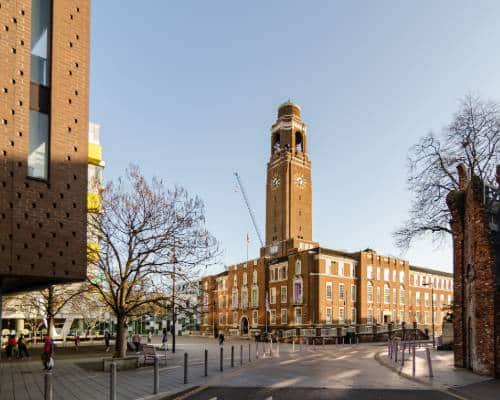
Barking has a long and distinct identity. The town grew up around its abbey, its fishing trade, and its Victorian industrial expansion, and traces of all three are visible: the ruins of Barking Abbey in the town centre, the old town area around St Margaret’s Church, and the former industrial land along the Thames now being converted at Riverside. It is not a place that has been invented recently.

The borough’s population of around 239,000 is one of the youngest in the country, and the cultural offer reflects that: the food scene is diverse and affordable, the market is busy, and the Broadway Theatre draws a regular programme. The council runs community events through the year, and the Riverside development is building community infrastructure, including two community centres and schools, into its phased delivery.

It is worth being direct about the challenges. Barking and Dagenham is among the most deprived boroughs in London, and the 2025 Indices of Deprivation place it in the most deprived 20% nationally on education measures (gov.uk, 2025). Weapons offences rose 53.9% year-on-year in the most recent crime data. These are real factors, not ones to be glossed over. The regeneration at Riverside is substantial and long-term, but transformation takes time, and buyers and tenants should weigh both the trajectory and the current conditions when making decisions.

Frequently Asked Questions

Is Barking good for families?

Barking has real strengths for families, particularly around school places. The borough has ranked top in London for first-preference secondary school allocations, and GCSE results reached record levels in 2026. Barking Park provides a large green space with children’s facilities, and the Riverside development is adding schools and parks incrementally. Families should research specific streets carefully given the borough’s deprivation indicators.

What are property prices like in Barking?

Barking and Dagenham consistently records some of the lowest average sold prices of any London borough, making it one of the more accessible entry points into Greater London property. The mix of Victorian terraces, mid-century stock, and new-build at Barking Riverside means the range is wide. For current verified sold price data, HM Land Registry on gov.uk is the most reliable source.

Is Barking well connected by public transport?

Yes. Barking station is served by the District line, the Hammersmith u0026amp; City line, the London Overground, and c2c National Rail services. Journey times to Liverpool Street run at around 25 minutes and Fenchurch Street is reachable in approximately 20 minutes. The Barking Riverside Overground extension, which opened in 2022, also connects the new development directly to the wider rail network.

Is Barking expensive to live in?

By London standards, Barking is relatively affordable. Rents for a one-bedroom flat typically start around £1,100–£1,300 per month, and council tax rates are in line with other outer-east London boroughs. The town centre market and discount supermarkets help keep day-to-day costs manageable, though it remains more expensive than most areas outside London.

What is the Barking Riverside development?

Barking Riverside is a major regeneration project on a 443-acre site on the north bank of the Thames, consented for up to 20,000 homes including more than 4,000 affordable. It is a joint venture between Lu0026amp;Q and the Mayor of London, with over £170 million in Homes England infrastructure funding committed to date. The development includes parks, schools, a health facility, community centres, and a new Overground station, and will continue to grow over the coming decade.

Azeem S.

I began as a junior apprentice in a corporate estate agents in 2006 have been working in the property sector since, so over 14 years of experience. I have worked in a range of industries from Property sales and lettings, to construction, development, commercial sales and lets as well as facilities management and maintenance. I have a degree in Economics, enjoy keeping fit and healthy, support Man Utd and have a young family.

Follow on:

Related Post

Updates: 12 Mins Read

Romford Area Guide: Living, Buying & Renting

Is Romford London’s Best-Value Commuter Town?

Fast Elizabeth line connections, average property prices well below inner east London, and a formally adopted regeneration masterplan – Romford is making a compelling case for buyers, renters, and investors alike. Whether you’re a first-time buyer weighing up affordability, a commuter calculating journey times to Canary Wharf, or a landlord eyeing consistent rental demand in a growing population centre, this comprehensive area guide covers everything you need to know before making your move.

Updates: 11 Mins Read

Romford Property & Architecture: Buyer, Landlord & Tenant Guide

From affordable Victorian terraces near the town centre to spacious inter-war semis fetching close to £700,000 in the outer sectors, Romford offers one of outer east London’s most varied housing markets – but that variety comes with complexity. Whether you’re a first-time buyer, a growing family, or an investor, knowing which postcode, property era, and potential pitfalls apply to your purchase could make all the difference. This comprehensive guide covers everything from listed buildings to subsidence risks.

Updates: 15 Mins Read

Romford Key Streets & Locations Guide

Here’s Why Romford’s Location Matters More Than You Think…

In Romford, two streets sharing a postcode and a five-minute walk can differ by over £100,000 in achieved sale prices. That gap isn’t coincidence — it’s driven by conservation boundaries, school catchments, Elizabeth line proximity, and architectural quality. From the dense town centre to Gidea Park’s protected Garden Suburb avenues and Emerson Park’s substantial private plots, getting the micro-location right here is everything. This street-by-street guide tells you exactly where to focus your search.