



×

Best Streets & Locations to Buy in Barking

Considering a move to Barking? if so, it’s not a single, uniform place.

The gap between its most sought-after streets and its least desirable roads can run to tens of thousands of pounds on comparable property types, and two buyers who both describe themselves as “looking in Barking” may end up in locations that feel entirely different in character, noise level, and day-to-day convenience.

Barking-streets-and-areas-guide

Understanding those differences before you search, rather than after, makes a material difference to what you end up with.

The area divides broadly into several distinct parts: the established residential streets to the north and west of Barking town centre, the rapidly transforming Barking Riverside development to the south, the Gascoigne area undergoing active regeneration, and the quieter, more suburban streets around Longbridge Road and towards the Upney end of the borough. Each has its own price point, tenure profile, and trajectory. This guide works through them in detail.

Premium Streets & Roads in Barking

Barking’s top streets sit to the north and north-west of the town centre, where wider plots, larger Victorian and Edwardian houses, and proximity to Barking Park give roads a character that is noticeably different from the denser streets closer to the A124.

Got a
Question?

Our team of experts is here to help in answering any query you may have.

The most consistently sought-after addresses include:

  1. Sandringham Road – a wide, tree-lined road with large semi-detached and detached Edwardian houses, close to Barking Park. Typical buyers are families prioritising space and green space access.
  2. Longbridge Road (northern stretch) – substantial semi-detached stock, good bus connections, and a quieter residential feel that appeals to owner-occupiers upgrading from smaller properties nearby.
  3. Movers Lane – a quieter address with good-sized plots and relatively low through-traffic, making it popular with families who have already searched the surrounding streets.
  4. Westrow Drive – one of the more established owner-occupier streets in the north of the area, with a consistent mix of 1930s and post-war semis on reasonable plot sizes.
  5. Faircross Avenue – well-maintained inter-war stock, close to the park and within practical distance of Barking station, which gives it a dual appeal for commuting families.

The premium in these streets is driven by a combination of factors: plot depth, the tree cover along certain roads, proximity to Barking Park, and the relative scarcity of purpose-built flats compared to streets closer to the town centre. These are not the cheapest entry points into Barking, but they hold value more steadily than the denser, more transient streets near the station.

Distinct Areas & Pockets within Barking

Barking’s micro-locations divide clearly enough that a comparison table is the most useful way to orient a buyer new to the area.

ZoneCharacterWho it suitsPrice indicator
North Barking (park-adjacent streets)Edwardian and inter-war semis, wide roads, low trafficFamilies, owner-occupiers upgradingAbove borough average
Town centre / station zoneDense, mixed tenure, good transportCommuters, first-time buyers, investorsAround borough average
Barking RiversideNew-build, purpose-built, riverside settingFirst-time buyers, young families, rentersVariable; some affordable units
Gascoigne Estate areaActive regeneration, older and new-build mixBuyers seeking value in a changing areaBelow borough average currently
Upney / South BarkingQuieter inter-war streets, less footfallOwner-occupiers preferring a suburban feelSlightly below north Barking

Factors to consider when choosing where to live

Conservation and heritage. Barking has a designated conservation area centred on the historic core around St Margaret’s Church and the remnants of Barking Abbey. Streets within or immediately adjacent to this zone, including parts of the area around Abbey Road and North Street, are subject to additional planning controls that restrict unsympathetic alterations. For buyers who value original character and are prepared to work within those constraints, this zone offers some of the most historically interesting stock in the area.

School catchments. Catchment boundaries in Barking and Dagenham shift annually and should always be verified directly with the London Borough of Barking and Dagenham before making a purchase decision. As a general pattern, streets in the north of the area, particularly around Sandringham Road and Faircross Avenue, tend to fall within catchments for schools that are consistently oversubscribed, reflecting the concentration of family owner-occupiers in those streets. Barking Abbey School and Riverside School are among the secondary options that attract family buyers to specific catchment zones. Always check the council’s current published catchment data before relying on any general guidance, including this.

Transport proximity. Barking station sits at the centre of the borough’s transport offer, served by the District line, Hammersmith & City line, London Overground (Suffragette line), and c2c National Rail services. Streets within ten to fifteen minutes’ walk of the station – including those around Longbridge Road, Station Parade, and the roads immediately north of the A124 – attract a commuter premium. Barking Riverside gained its own Overground station on the Suffragette line in 2022, which has meaningfully improved the appeal of that development for buyers who might otherwise have been deterred by its distance from the town centre.

Property Price Variation in Barking

Barking has the lowest average house price of any London borough at £370,000 (London Borough of Barking and Dagenham, 2024), but that figure conceals considerable street-level variation. The gap between a three-bedroom semi on Sandringham Road and a comparable-sized terraced house on a denser street near the Gascoigne Estate is substantial.

Where ONS data supports street-level figures, the broad pattern is as follows:

Zone/StreetProperty type2026 Price range
North Barking (park-adjacent)3–4 bed semi-detached£475,000–£565,000+
Town centre/station zone2 bed flat or maisonette£240,000–£325,000
Town centre/station zone2–3 bed terraced£350,000–£445,000
Barking Riverside2 bed new-build flat£270,000–£365,000
Gascoigne/south Barking2–3 bed terraced£300,000–£380,000

These figures reflect recent completed transactions rather than asking prices. They should be treated as indicative ranges rather than precise current market values. Individual streets within each zone will vary depending on road width, aspect, parking, and the condition of the immediate streetscape.

The key price drivers in Barking are: distance from the station (positive effect up to around fifteen minutes’ walk, then diminishing), proximity to Barking Park (consistent premium for park-facing or park-adjacent streets), plot size and road width (wider roads with deeper gardens outperform narrower terraced streets), and tenure density (streets with a higher proportion of owner-occupiers and lower concentrations of HMOs tend to hold value better).

Hidden Gems & Overlooked Streets in Barking

Not every high-value street has the market value to match just yet. Here’s a few streets you may not have heard of, but which carry all the features you might expect for an up-and-coming residential area.

  • Upney Lane and the streets running off it towards the Upney end of the borough are frequently overlooked by buyers who focus their search on the town centre and park-adjacent streets. The housing stock here is predominantly inter-war semi-detached and terraced, quieter than the roads nearer the A124, and modestly priced relative to comparable stock in north Barking. Upney station on the District line provides a useful alternative to Barking station for buyers who prioritise a shorter walk over the wider rail connections.
  • The streets immediately adjacent to the Gascoigne Estate regeneration zone are worth watching. The Gascoigne redevelopment will deliver over 1,500 new homes alongside a new park, play areas, and significant landscaping. Streets that currently suffer from proximity to a tired estate will benefit from the transformation of that immediate environment. Buyers who can tolerate several years of construction activity may find that prices in those adjacent streets move once the regeneration reaches completion.
  • Parts of the River Road/Renwick Road corridor near the industrial fringe are not conventionally residential, but the ongoing transformation of Barking Riverside is gradually shifting perceptions of the wider southern part of the borough. This remains a longer-term call rather than an immediate opportunity.

Architectural Character by Street in Barking

Barking’s housing stock reflects several distinct periods of development, and the character of individual streets maps fairly closely onto those periods.

The streets to the north of the town centre, particularly around Sandringham Road, Faircross Avenue, and the roads running between them, are predominantly Edwardian and early inter-war in character: bay-fronted semis with original brick detailing, larger front gardens than the later stock, and rear gardens of a depth that is increasingly unusual in inner East London.

The streets closer to the town centre and the A124 are denser and more mixed. Much of this stock dates from the 1930s through to the 1960s, with a higher proportion of purpose-built flats and converted maisonettes. Original features are less consistently preserved in this zone, partly because of the higher turnover of occupiers and partly because permitted development has altered many properties over the decades.

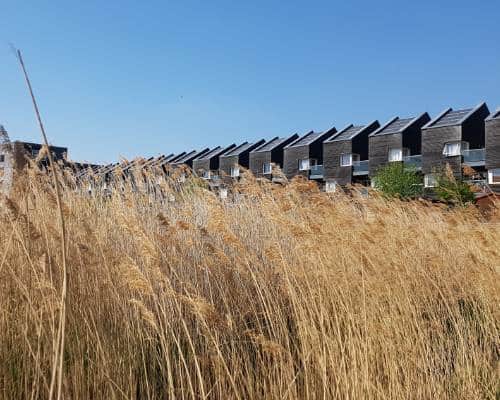
Barking Riverside is entirely new-build, designed as a mixed-use urban quarter rather than a traditional residential street pattern. It offers none of the period character of the northern streets but does provide modern specification, energy efficiency, and a riverside setting that appeals to a different buyer profile entirely.

The conservation area around St Margaret’s Church and Barking Abbey contains some of the oldest built fabric in the borough, though much of the immediately surrounding street pattern was altered significantly in the twentieth century. For more detail on property types, periods, and what to look for structurally when buying in Barking, see the companion Barking property and architecture guide.

Rental & Owner-Occupier Character in Barking

Barking has a higher proportion of private rented stock than the London average, reflecting both its affordability at the lower end and the significant volume of investment purchases made in the borough over the past two decades. The tenure balance varies considerably by street. Here are the approximate profiles of the different areas in Barking:

ZonePredominant tenureTypical profile
North Barking (park streets)Owner-occupierFamilies, long-term residents
Town centre / station zoneMixed; higher rental concentrationCommuters, young professionals, investors
Barking RiversideMixed; significant BTR and shared ownershipFirst-time buyers, renters, young families
Gascoigne / south BarkingHigher social and affordable rentedMixed; transitional as regeneration proceeds
Upney / western streetsPredominantly owner-occupierEstablished households, older demographic

The streets with the highest rental concentration are generally those closest to Barking station, where smaller flats and converted properties have been bought as investment stock. For owner-occupier buyers who prefer a street where most neighbours are long-term residents, the north Barking and Upney zones are the more reliable options. For landlords, the station-adjacent streets and Barking Riverside both offer strong tenant demand, though Barking Riverside’s growing supply of purpose-built rental homes means competition for tenants is increasing.

Barking and Dagenham is also London’s most prolific council housebuilder, having delivered approximately 20% of all council housing built in London in recent years. This means a significant proportion of stock in parts of the borough is social rented, particularly in the Gascoigne area and parts of south Barking.

Development & Infrastructure Impact by Location in Barking

No other area in East London has development activity on the scale currently under way in Barking, and the implications for specific streets and micro-locations are real and measurable.

  1. Barking Riverside is the most significant single project. Revised outline planning consent has been granted for up to 20,000 homes on the 443-acre site, almost doubling the original 10,800-home consent. Over 3,000 homes have already completed. The development includes five schools, two community hubs, and cycling infrastructure, and is backed by over £170m from Homes England. The Overground station opened in 2022 and the Uber Boat pier provides an alternative route into central London. For buyers considering Barking Riverside, the key question is supply: with up to 17,000 further homes still to be built, resale values in the earlier phases will be competing against new stock for some years. That is not necessarily a reason to avoid the development, but it is a reason to think carefully about the exit.
  2. The Gascoigne Estate regeneration will deliver over 1,500 homes alongside a new park, climbing wall, and 300 cycle spaces. Streets immediately surrounding the estate, particularly those along the eastern edge closer to the town centre, are the most likely to benefit from the improved public realm and green space once construction is complete.
  3. Queen Mary University’s dental centre in central Barking, backed by a £4.1m investment, is a smaller but notable piece of institutional investment in the town centre that adds to the case for the town centre streets as a longer-term hold.

For buyers on streets adjacent to any of these sites, it is worth checking the current construction programme with the London Borough of Barking and Dagenham’s planning portal before committing, since active construction can affect both day-to-day amenity and short-term resale appetite.

Find Your Area to Live in Barking

If you’re looking for property in Barking, Sandra Davidson are the local experts who can help – if you’re looking to buy or rent, you can search our properties or register on our website for updates on the latest properties that come to market. Equally, you can use our Barking Guaranteed Rent Service as a landlord if you’re looking for an easier way to let in the area.

Frequently Asked Questions

What are the best streets to buy in Barking?

Typically, the most sought-after streets are in north Barking close to Barking Park, particularly Sandringham Road, Faircross Avenue, and the roads around Longbridge Road. These offer larger Edwardian and inter-war properties, lower traffic, and a higher concentration of long-term owner-occupiers, though they may carry a premium over the borough average.

Why are some streets in Barking more expensive than others?

The main price drivers are traditionally proximity to Barking Park, plot size, road width, distance from Barking station, and the balance of owner-occupiers versus rental properties on a given street. Streets with larger Edwardian semis, tree cover, and park access may trade at significantly more than denser terraced streets closer to the town centre.

Is Barking Riverside a good place to buy?

Barking Riverside offers a riverside setting, modern new-build homes, its own Overground station, and growing local amenities. The key consideration is supply: consent has been granted for up to 20,000 homes in total, with the majority still to be built, so buyers should think carefully about resale demand if they plan to sell within a few years.

Which parts of Barking suit families best?

North Barking, particularly around Sandringham Road and Faircross Avenue, has the highest concentration of family owner-occupiers and tends to fall within catchments for oversubscribed schools. Catchment boundaries change annually, so always verify current boundaries directly with the London Borough of Barking and Dagenham before making a purchase decision based on school access.

How does Upney compare to central Barking for buyers?

Upney has a quieter, more suburban feel than the station-adjacent streets, with predominantly inter-war semi-detached stock and a stronger owner-occupier profile. Prices are modestly lower than the north Barking premium streets, and Upney station on the District line provides a practical alternative to Barking station for commuters.

Azeem S.

I began as a junior apprentice in a corporate estate agents in 2006 have been working in the property sector since, so over 14 years of experience. I have worked in a range of industries from Property sales and lettings, to construction, development, commercial sales and lets as well as facilities management and maintenance. I have a degree in Economics, enjoy keeping fit and healthy, support Man Utd and have a young family.

Follow on:

Related Post

Updates: 11 Mins Read

Property in Barking: Types, Characteristics & What to Check

Barking has some of the lowest house prices in London – yet it sits on the Overground and District line and boasts one of the capital’s most active development pipelines. Whether you’re a first-time buyer, an investor, or a family seeking genuine space, understanding what you’re actually buying matters enormously. From solid-wall Victorian terraces to Gascoigne Estate regeneration schemes, this guide covers property types, conservation designations, period characteristics, and exactly what to check before you sign.

Updates: 11 Mins Read

Living in Barking: The Complete Area Guide

Barking is one of London’s most overlooked addresses – and that may not last much longer. With a £multi-billion regeneration underway, record school results, and Zone 4 prices that still make the numbers work, it’s attracting first-time buyers, young families, and savvy investors alike. But is it right for you? Our complete area guide covers transport links, schools, property prices, green spaces, and the honest challenges – everything you need to decide.

Updates: 12 Mins Read

Romford Area Guide: Living, Buying & Renting

Is Romford London’s Best-Value Commuter Town?

Fast Elizabeth line connections, average property prices well below inner east London, and a formally adopted regeneration masterplan – Romford is making a compelling case for buyers, renters, and investors alike. Whether you’re a first-time buyer weighing up affordability, a commuter calculating journey times to Canary Wharf, or a landlord eyeing consistent rental demand in a growing population centre, this comprehensive area guide covers everything you need to know before making your move.