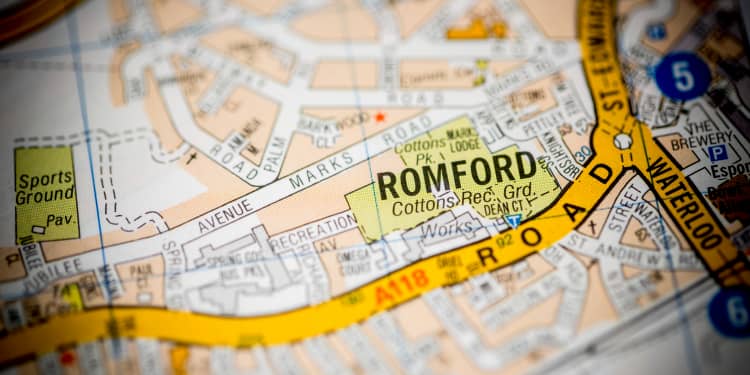
Wondering what area of Romford to invest in? Or, perhaps you’re looking for a property to rent? Either way, our guide explains the different areas of Romford so you can make an informed decision about where to invest or live.
Romford offers the convenience of fast connections into central London with more affordable housing for buyers and renters compared to the more central locations of London. It is one of the larger towns in East London, offering a range of property types to suit different needs. However, when considering moving to Romford, it is important to note that micro-locations have different appeals.
Two streets in Romford can share a postcode and differ by well over £100,000 in achieved sale prices. This reflects conservation status, school catchment boundaries, proximity to Romford station and the Elizabeth line, and the architectural quality of what’s actually been built, and what’s been preserved. Getting the micro-location right matters here more than in many East London towns, because Romford covers a wide geographic spread, from the dense town centre around Market Place to the secluded, tree-lined avenues of Gidea Park and the large-plot detached houses of Emerson Park.
The town divides broadly into three tiers:
The town centre and its immediate streets offer the strongest transport access and the greatest density of flats and smaller homes.
The suburban belt running north and east: Gidea Park, Emerson Park and Rise Park, delivers period character, family-sized houses, and the catchments that drive significant price premiums.
Orbiting areas further out, areas like Harold Hill and Chadwell Heath offer considerably lower entry points, now with improved Elizabeth line access that is beginning to shift their market position.
This guide works through each tier, street by street, so you can decide where your search should focus.
Got a Question?
Our team of experts is here to help in answering any query you may have.
Romford’s most consistently sought-after addresses sit in Gidea Park and Emerson Park, both of which sit to the north-east of the town centre and deliver a combination of period architecture, leafy surroundings and good school catchments that commands a clear premium over the wider RM1–RM2 postcode area.
In Gidea Park, the roads closest to Gidea Park station and the open green of Raphael Park represent the strongest concentration of premium demand. Heath Drive, Balgores Lane, and the roads running off Main Road towards the park are consistently among the most sought-after, with detached and semi-detached houses from the early twentieth century, wide plots, and quiet residential character that sits in marked contrast to streets closer to the ring road.
Gidea Park also contains the Gidea Park and Heath Park Conservation Area, which protects a significant portion of the original Garden Suburb layout and restricts unsympathetic alterations – making the stock here more reliably preserved than in undesignated streets nearby.
In Emerson Park, the premium is driven less by conservation designation and more by plot size and exclusivity. The roads here, including Emerson Park and the avenues running off it, contain some of the largest private houses in the borough, many on substantial grounds. Proximity to the golf courses and Hornchurch Country Park adds to the appeal for buyers who prioritise space over commute time.
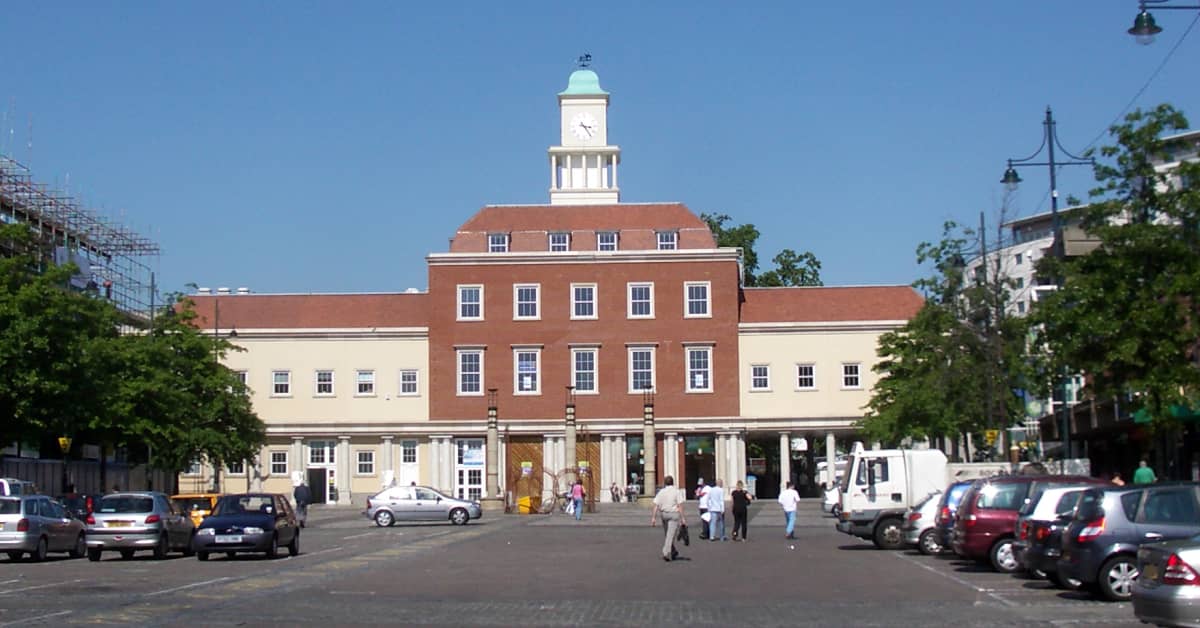
Within the town centre belt, South Street’s position immediately outside Romford station gives it strong practical appeal for commuters, though the residential stock here is predominantly flat-based rather than family houses. Streets joining Market Place retain some original building features alongside modern developments.
Key premium streets at a glance:
Heath Drive, Gidea Park – detached and semi-detached Edwardian and inter-war houses; conservation area protection; strong family demand
Balgores Lane, Gidea Park – period semis and detached; close to Raphael Park and Gidea Park station
Emerson Park Avenue and surrounds – large detached houses; generous plots; golf course proximity
Main Road (Gidea Park stretch) – mixed period and inter-war stock; convenient for station and local schools
South Street (residential element) – flat-focused; strongest transport access in RM1; suited to commuter buyers
Distinct Areas within Romford
Romford’s residential geography splits into clearly distinct pockets, each with a different price point, property type, and buyer profile. The table below sets out the main zones.
Zone
Character
Who it suits
Price indicator
Gidea Park
Tree-lined, conservation-protected Garden Suburb; period houses
Families; period property buyers; commuters
Upper end of Romford market
Emerson Park
Exclusive large-plot detached houses; quiet lanes
High-end buyers; those prioritising space
Highest in borough
Rise Park / Collier Row
Post-war suburban semis and detached; open green spaces
Families seeking space at lower entry points
Mid-range
Town centre (RM1)
Dense flatted stock; maximum transport access
Commuters; first-time buyers; investors
Lower to mid-range
Harold Hill
Post-war estates; new development; green space
First-time buyers; value-focused buyers
Lower end
Chadwell Heath
Interwar and post-war stock; Elizabeth line access
Commuters; first-time buyers
Lower to mid-range
Conservation areas play a significant role in Gidea Park specifically. The Gidea Park and Heath Park Conservation Area covers the original Garden Suburb streets laid out from the early twentieth century, restricting permitted development rights and requiring planning consent for works that would be straightforward elsewhere. For buyers, this means the streetscape is more reliably intact, but also that extensions and alterations require more careful navigation.
School catchments are a significant price driver across Gidea Park and Rise Park. Catchment boundaries for the most sought-after primary schools in the area shift periodically; the London Borough of Havering publishes updated admissions information each year and is the authoritative source for current boundaries. Buyers prioritising specific schools should verify catchments directly with the council before committing to a street.
Transport proximity concentrates demand in two distinct ways: streets within comfortable walking distance of Romford station benefit from Elizabeth line access, with Bond Street reachable in 34 minutes; and streets near Gidea Park station draw a separate pool of buyers who prefer the quieter residential setting whilst retaining a direct Elizabeth line connection.
Property Price Variation in Romford
Price variation across Romford’s streets tends to be influenced by four factors: proximity to the Elizabeth line, conservation area designation, school catchment position, and property type and plot size. The postcode split reflects price variations: RM2 (covering Gidea Park and the premium residential belt) consistently records higher achieved prices than RM1 (town centre and inner suburbs), with RM3 (Harold Hill and Rise Park) and RM6 (Chadwell Heath) sitting lower again.
The considerable price difference between RM2 and RM1 for comparable property types has been consistent over recent years, with detached houses in RM2 achieving higher prices than equivalent stock in RM1. Street-level data for individual roads is available via gov.uk price paid records, which buyers can search directly to verify what comparable properties on a specific street have actually sold for.
The qualitative drivers of variation are:
Conservation area designation adds a premium in Gidea Park by protecting architectural integrity and restricting overdevelopment
Plot size commands the sharpest premium in Emerson Park, where the largest plots are genuinely rare
Station walking distance adds value in both the RM1 and RM2 zones, with streets within ten minutes’ walk of either Romford or Gidea Park stations typically outperforming those that require a bus or drive
Road type matters: quieter residential avenues with low through-traffic achieve more than busier arterial roads even where the housing stock is similar
School catchment creates micro-premiums on specific streets that can be difficult to see in postcode-level data but are clearly visible when comparing achieved prices on adjacent roads with different catchment positions
Not every street with high-quality housing stock is well known. It’s worth buyers and investors looking at these local streets to find the kind of homes they’re looking for.
Rise Park – Occupying the northern fringe of the RM3 postcode, Rise Park is consistently undervalued relative to its qualities. The streets here, many laid out in the post-war decades, offer spacious properties, access to Rise Park, and a quiet residential character that buyers focused on Gidea Park often overlook. Entry prices are considerably lower than RM2, and the area is well served by buses connecting to Romford station.
Collier Row – Running along the northern edge of the borough, Collier Row sits in a similar position. The housing stock is predominantly post-war semis and detached houses, the streets are relatively quiet, and the area benefits from green space proximity. It hasn’t attracted the same level of attention as the Gidea Park belt, which keeps prices accessible, though that position may shift as Romford’s overall population growth continues to push demand outward from the centre.
Chadwell Heath – This area deserves more attention from buyers priced out of inner East London. Its Elizabeth line connection makes Stratford reachable in around ten minutes and Liverpool Street in approximately twenty, and the housing stock, largely interwar semis, offers more space than comparable-priced properties elsewhere. The RM6 postcode offers lower prices relative to RM1 and RM2.
Harold Hill – Its new residential development, proximity to Dagnam Park, and low entry prices make it worth considering for buyers looking to benefit from the major regeneration projects that are currently underway.
Architectural Character by Street in Romford
Romford’s architectural stock is more varied than many prospective buyers expect. The most well-preserved concentration sits in Gidea Park, where the Garden Suburb layout from the early twentieth century produced wide tree-lined avenues of Arts and Crafts-influenced houses, many with original features intact, partly because conservation area designation has limited alterations. The contrast with streets immediately outside the conservation boundary is sometimes striking.
Emerson Park‘s large detached houses date largely from the interwar period, built on generous plots to a standard that reflects the exclusivity the area was designed to project. Many retain original architectural detailing, though the sheer scale of some plots has enabled extensions that have altered original proportions.
The town centre and South Street corridor contains a mix of Victorian commercial buildings converted to residential use, post-war flatted development, and more recent purpose-built blocks. Original fabric here is less common, some Victorian terrace streets survive in reasonable condition; others have been significantly altered or replaced.
Rise Park, Collier Row, and Harold Hill are predominantly post-war, with the standard range of semi-detached and detached houses built from the 1940s through the 1960s. These streets offer less in the way of original period character but frequently deliver better space standards such as wider plots, larger gardens, garages in relation to Victorian terraces at comparable prices.
For a full account of Romford’s property types, what to look for when buying, and how different architectural periods affect value and running costs, see the accommpanying Property & Architecture guide.
Rental & Owner-Occupier Character in Romford
Tenure varies considerably across Romford’s micro-locations. The town centre, particularly the RM1 postcode, has a higher concentration of privately rented flatted stock than the suburban belt to the north and east. New developments around the town centre has added to the rental supply here, and the area attracts tenants who prioritise Elizabeth line access and proximity to town centre amenities over space.
Gidea Park and Emerson Park are strongly owner-occupier dominated. The price points, property types, and family-oriented character of these areas mean that rental stock is limited and demand from renters, where it exists, tends to come from professionals or families in transition rather than long-term tenants. Landlords considering these postcodes should factor in a smaller rental pool and higher acquisition costs, though achievable rents for larger houses reflect the premium character of the area.
Rise Park and Collier Row sit in between: predominantly owner-occupied, but with a meaningful proportion of privately rented houses and conversions. Harold Hill has a higher proportion of social and affordable housing than most of Romford’s residential areas, reflecting its origins as a post-war council estate, though private ownership has grown significantly since the right-to-buy era.
For landlords assessing rental demand by micro-location, the strongest combination of tenant demand, yield, and liquidity sits in the RM1 postcode for flats, and in the inner suburban belt for family houses. Sandra Davidson’s lettings service covers the full Romford area and we can advise on achievable rents at street level.
Development & Infrastructure Impact in Romford
The Romford Masterplan, formally adopted by Havering London Borough Council in March 2025, is the most significant planning document affecting the town’s streets for at least a decade. Its 16-year vision for the town centre identifies South Street, North Street, High Road, Market Place, and their adjoining streets have been identified as areas for improving public spaces while maintaining the historic urban character.
Liberty Vision Redevelopment: The most immediate impact on specific streets comes from the Liberty Vision redevelopment. Developer HUB has submitted a hybrid planning application for up to 800 new homes in blocks of up to 23 storeys on the Liberty site, alongside commercial and community space. Streets immediately adjacent to the Liberty site, including those running off South Street and the Market Place area, will see the most significant change in character as this scheme progresses. Buyers and tenants considering these streets should review the current planning application status directly via the London Borough of Havering planning portal before committing.
The Brewery site: this is also subject to phased redevelopment as part of the wider Masterplan. This will affect the streets running between the Brewery and the station, adding residential density and changing the pedestrian flow in that part of the town centre.
Superloop route SL12: On transport infrastructure, the Superloop route SL12 will soon provide Romford’s first express bus connection into the wider Superloop network. Streets near the key bus terminals around Romford station, Mercury Gardens, and the Market Place will benefit most from this improved connectivity.
The projected population growth of 25,000 additional residents by 2041 means development pressure across the town will remain high throughout this period. Streets on the edges of the town centre that currently feel peripheral are likely to see investment and intensification as the Masterplan is delivered.
Frequently Asked Questions
What are the best streets to buy in Romford?
The consistently strongest addresses sit in Gidea Park – particularly the streets within the Gidea Park and Heath Park Conservation Area, including Heath Drive and Balgores Lane – and in Emerson Park, where large-plot detached houses on quiet avenues represent the top of the Romford market. For commuters prioritising Elizabeth line access above all else, streets within ten minutes’ walk of Romford station on the South Street side offer the best transport position for flat buyers.
Which areas of Romford are in the best school catchments?
School catchments in Romford shift annually, so it advisable to check the London Borough of Havering admissions information, published each year. Broadly, streets in Gidea Park and Rise Park tend to fall within the catchments of the most sought-after primary schools in the borough, and this is reflected in the price premiums those streets command over neighbouring roads that fall just outside.
Why are some streets in Romford so much more expensive than others?
The typical drivers are: Elizabeth line walking distance, conservation area designation (which protects architectural quality and restricts overdevelopment), school catchment position, plot size, and road character. Two streets a short walk apart can differ significantly if one falls within the Gidea Park conservation area and the other does not, or if one is in catchment for a high-performing school and the other is not.
Are there any up-and-coming areas in Romford?
Chadwell Heath is the strongest case for buyers looking ahead. Its Elizabeth line connection is underpriced relative to comparable inner East London postcodes, and its interwar housing stock offers genuine space. Rise Park and Collier Row are worth attention for buyers who want suburban character at accessible prices. Harold Hill is more speculative but has low entry points and is directly referenced in the Romford Masterplan’s growth projections.
How will the Romford Masterplan affect property values?
The Masterplan, adopted in March 2025, focuses new development on the town centre core around South Street, North Street, Market Place, and the Liberty and Brewery sites. Streets close to these development zones will see significant change in the coming years, including new tall residential buildings. Streets in the established suburban belt including Gidea Park, Emerson Park, Rise Park are unlikely to see new developments but stand to benefit from improved town centre amenity as regeneration progresses.
Is Romford better for buying or renting?
It depends on the micro-location. The town centre RM1 postcode has a well-established rental market with strong demand from commuters and professionals. The suburban belt is predominantly owner-occupier territory, with limited rental stock and higher acquisition costs. Buyers who can stretch to RM2 are generally rewarded over time by the combination of conservation protection, school catchments, and the relative scarcity of comparable stock.
What is the difference between Romford RM1 and RM2?
RM1 covers the town centre and inner suburbs, with a mix of Victorian terraces, post-war flatted stock, and newer apartment buildings. RM2 covers Gidea Park and the northern residential belt, where the stock is predominantly Edwardian and interwar houses, many within the conservation area. RM2 consistently achieves higher prices for comparable property types, driven by architectural quality, school catchments, and the character of the streets themselves.
Looking to Buy or Rent in Romford? We Can Help
If you’ve identified the streets or micro-areas in Romford that match what you’re looking for, the next step is understanding what’s available and what it’s realistically worth. Whether you’re a buyer narrowing your search, a tenant weighing up locations, or a seller or landlord wanting to know how your street’s position affects your price, Sandra Davidson can give you specific, current guidance. Browse properties for sale in Romford or speak to the team directly to discuss your next move.
Share
Azeem S.
I began as a junior apprentice in a corporate estate agents in 2006 have been working in the property sector since, so over 14 years of experience. I have worked in a range of industries from Property sales and lettings, to construction, development, commercial sales and lets as well as facilities management and maintenance. I have a degree in Economics, enjoy keeping fit and healthy, support Man Utd and have a young family.
Fast Elizabeth line connections, average property prices well below inner east London, and a formally adopted regeneration masterplan – Romford is making a compelling case for buyers, renters, and investors alike. Whether you’re a first-time buyer weighing up affordability, a commuter calculating journey times to Canary Wharf, or a landlord eyeing consistent rental demand in a growing population centre, this comprehensive area guide covers everything you need to know before making your move.
From affordable Victorian terraces near the town centre to spacious inter-war semis fetching close to £700,000 in the outer sectors, Romford offers one of outer east London’s most varied housing markets – but that variety comes with complexity. Whether you’re a first-time buyer, a growing family, or an investor, knowing which postcode, property era, and potential pitfalls apply to your purchase could make all the difference. This comprehensive guide covers everything from listed buildings to subsidence risks.
Discover the hidden gems of Redbridge with our guide to the top neighbourhoods and vibrant main streets in this diverse borough. Whether you’re seeking leafy suburbs, bustling shopping hubs, or cultural hotspots, Redbridge offers something for everyone. Uncover the best places to live, shop, and relax—plus insider tips on where to find the area’s finest cafes, parks, and local attractions. Dive in to explore what makes Redbridge a standout destination in East London!
This form collects and stores the information provided by you, so that we can contact you about your requirements. Please read our privacy policy for full information on how we manage and protect your submitted data.
This form collects and stores the information provided by you, so that we can contact you about your requirements. Please read our privacy policy for full information on how we manage and protect your submitted data.