

×

Newham Property & Architecture Guide

Newham’s property stock tells the story of a borough that has been rebuilt, extended and transformed several times over.

Victorian terraces and Edwardian semis dominate the older residential streets, sitting alongside substantial post-war estates and, increasingly, a wave of new-build towers and mixed-use schemes driven by the Royal Docks and Olympic Park regeneration. For buyers, that range creates a wide choice, but it also demands careful research, because the quality and condition of stock varies considerably across the borough.

So, if you’re looki ng to buy, let or rent in Newham – explore our overview of the types of homes available across the region.

Types of Property in Newham

Newham’s housing spans a wider range than most East London boroughs, from late-Victorian terraces to 21st-century waterfront towers. The table below provides a reference overview but price ranges are indicative and shift considerably by ward and condition.

Living in Newham guide 2026 ST
Property TypeTypical PeriodTypical Tenure
Victorian terrace1870s–1900sFreehold
Edwardian semi-detached1900s–1914Freehold
Post-war council-built flat1950s–1970sLeasehold (ex-RTB) or social rent
Purpose-built new-build flat2010s–presentLeasehold
Converted flat (Victorian/Edwardian)VariesLeasehold

1. Victorian Terraces

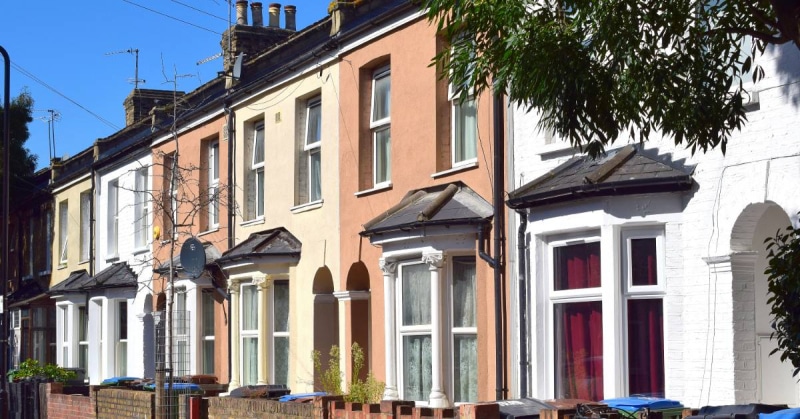
The densest concentrations of Victorian terraced housing sit in Forest Gate, Manor Park and Plaistow. Streets here follow the familiar grid patterns laid out after the Eastern Counties Railway arrived in the 1840s and 1850s, with development accelerating through the 1870s and 1890s.

Got a
Question?

Our team of experts is here to help in answering any query you may have.

Most are two-storey, with a bay to the ground floor, a small front garden behind a low wall, and a rear yard of varying depth. Brick quality is generally consistent, with London stock brick on earlier builds, red brick on later ones.

2. Edwardian Semis and Larger Houses

Forest Gate, particularly around Woodgrange Road and the streets north of the station, has a higher proportion of Edwardian stock than the rest of the borough. These are noticeably larger than the Victorian terraces, with wider frontages, taller ground floors, more decorative external detail, and rear gardens that frequently extend to 50 feet or more.

Many remain in single-family use, while others have been converted into flats.

3. Post-War Estates

Significant portions of Newham were rebuilt after wartime bomb damage, and the borough has a large stock of post-war local authority housing consisting of low- and mid-rise blocks from the 1950s and 1960s, as well as taller tower blocks from the 1970s.

Many ex-Right-to-Buy flats in these blocks are now on the open market. Build quality varies, so buyers should check service charges, remaining lease length, and any planned major works carefully before proceeding.

4. New-Build and Converted Flats

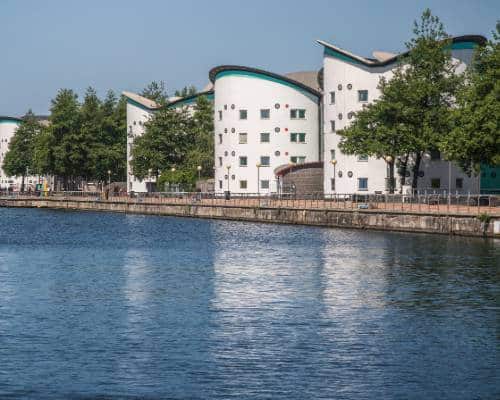
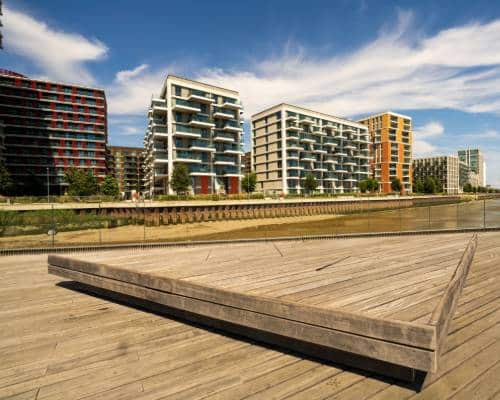
The Royal Docks, Stratford and Canning Town have seen the largest concentration of new-build development in the borough, much of it is high-density flat schemes.

These are predominantly leasehold, with ground rents and service charges that buyers must scrutinise. Conversion flats, where Victorian and Edwardian houses split into two or three units, are spread across Forest Gate and Manor Park.

Conservation Areas & Listed Buildings in Newham

Newham has fewer conservation area designations than many neighbouring boroughs, which reflects both the extent of wartime destruction and the pace of post-war rebuilding. The London Borough of Newham’s planning portal confirms several conservation areas, including:

  • Forest Gate town centre – A short section of the high-street and orbiting builds are protected.
  • Woodgrange, Forest Gate – Covers the Victorian shopping parade and surrounding residential streets. Shopfront alterations and changes to upper-floor windows require planning permission.
  • West Ham Park – The area around the public park, including streets of detached and semi-detached Victorian and Edwardian villas. Restrictions apply to extensions, outbuildings and boundary treatments visible from the street.

Within these areas, permitted development rights are reduced and external wall cladding, roof alterations, and replacement windows in materials inconsistent with the original build will require consent. For buyers drawn to preserved Victorian streetscapes, these designations offer a degree of protection that the wider borough cannot guarantee.

Newham has a modest number of listed buildings. Historic England records include the former St Luke’s Church in Victoria Dock Road (Grade II), the Passmore Edwards Library in Green Street (Grade II), and several structures associated with the Royal Victoria Dock. Buyers purchasing within or adjacent to listed structures should take specialist listed building advice before any alteration works.

Period Property Characteristics in Newham

Victorian (1870s–1900s)

  • Two-storey, full London stock or red brick construction
  • Projecting bay windows to ground floor, typically square or canted
  • Sash windows throughout (many replaced with uPVC, which is a common modification in this area)
  • Slate roofs with chimney stacks to front and rear
  • Solid external walls (no cavity), typically 225mm brick
  • Internal ceiling heights of 2.5m–2.7m on the ground floor
  • Original features include picture rails, cornicing and tiled hallway floors where unmodified

Victorian terraces in Forest Gate and Manor Park are more likely to retain original features than those in Plaistow and Canning Town, where modification rates are higher. Original sash windows are increasingly rare and worth noting when present.

Edwardian (1900–1914)

  • Wider plots and more generous internal layouts than Victorian predecessors
  • Pebbledash or roughcast render to upper floors on some examples
  • Larger rear gardens, frequently with original outbuildings
  • Decorative timber bargeboards and gabled dormers on some larger examples
  • Higher ceilings than Victorian stock, often 2.7m–2.9m at ground floor
  • Suspended timber floors throughout

The Edwardian semis around Woodgrange Park are among the most intact in the borough. Several streets here have avoided the wholesale window and door replacements seen elsewhere, giving them a streetscape coherence that buyers seeking period character should look for specifically.

Post-War and New Build

Post-war blocks are concrete-frame or brick-panel construction. New-build flat schemes use steel-frame or reinforced concrete, with curtain glazing on taller towers. Neither type carries the period feature considerations relevant to Victorian and Edwardian stock, but both carry their own survey and leasehold considerations.

Recent Developments in Newham

Newham has more active development than almost any other London borough. The key schemes buyers and investors should be aware of:

  1. Silvertown (Thameside West): A major mixed-use scheme on the former Silvertown site, with planning approval for approximately 5,000 homes. Newham Council’s Planning Committee approved a revised masterplan including 30% affordable housing. Delivery is phased over several years.
  2. Carpenters Estate Regeneration: The long-running regeneration of the Carpenters Estate in Stratford has been accelerated, with Cabinet decisions covering early phases including the James Riley Point tower refurbishment and new residential quarters around Stratford station. The scheme will add significant flat stock to the Stratford market.
  3. Royal Docks: The wider Royal Docks area, designated as London’s only Enterprise Zone, has received £233 million in infrastructure loan funding from Homes England. Residential development here is ongoing, predominantly high-rise leasehold flats with waterfront settings.

Newham Council’s five-year Growth Plan identifies up to 8,000 new homes on council-owned land across the borough. Buyers considering new-build purchases should check planning portal records for phasing, infrastructure commitments and affordable housing obligations on any specific scheme before exchanging contracts.

Outside Space in Newham

Victorian terraces across Forest Gate and Manor Park typically have a small front garden (often 3–5 metres deep) and a more usable rear garden running to 20–35 feet. Many rear gardens in the densest streets have been partially built over with extensions, reducing usable outdoor space. Side returns are common on wider plots and are frequently the subject of single-storey extension planning applications.

Edwardian semis offer more generous outside space and rear gardens of 40–60 feet are not unusual. Some corner plots retain original side gardens. Off-street parking is more common on Edwardian streets where frontages allow a dropped kerb.

Converted flats in Victorian and Edwardian houses typically have either no outside space or a shared rear garden divided informally between units, so buyers should check the lease carefully for access rights. Purpose-built new-build flat schemes generally provide communal landscaped areas rather than private gardens; balconies or terraces vary by floor and scheme.

Post-war flat blocks offer the least private outside space. Communal grounds are present on most estates but maintenance standards vary. Off-street parking is limited across the older residential streets of the borough, on newer developments it is frequently restricted by planning conditions favouring car-free or car-lite design.

Ready to Find Your Newham Property?

Finding your ideal property in Newham requires some detailed research. The period stock in Forest Gate and Manor Park offers real value relative to equivalent houses in neighbouring boroughs, but the quality range is wide and condition varies street by street.

If you’re looking to buy, rent or in vest in the local area – you can start searching our properties today.

Frequently Asked Questions

What types of property are there in Newham?

Newham has a wide range of property types, including Victorian terraces in Forest Gate and Manor Park, larger Edwardian semis around Woodgrange Park, post-war local authority flats (many now sold under Right to Buy), and a growing stock of new-build leasehold flats in Stratford, Canning Town and the Royal Docks. Converted flats in Victorian and Edwardian houses are also common across the older residential streets.

Are there conservation areas in Newham?

Yes, though fewer than in neighbouring boroughs. Designated conservation areas include Earlham Grove and the Woodgrange area in Forest Gate, and the streets around West Ham Park. Within these areas, permitted development rights are reduced and external alterations typically require planning consent. Buyers should check with Newham Council’s planning portal before purchasing in or near a designated area.

Is most property in Newham leasehold or freehold?

Victorian and Edwardian houses are generally freehold. Flats, whether in converted houses, post-war blocks or new-build schemes, are almost always leasehold. For leasehold purchases, buyers should check the unexpired lease term, ground rent provisions and service charge history carefully, as these vary considerably across the borough’s different stock types.

Azeem S.

I began as a junior apprentice in a corporate estate agents in 2006 have been working in the property sector since, so over 14 years of experience. I have worked in a range of industries from Property sales and lettings, to construction, development, commercial sales and lets as well as facilities management and maintenance. I have a degree in Economics, enjoy keeping fit and healthy, support Man Utd and have a young family.

Follow on:

Related Post

Updates: 11 Mins Read

Living in Newham: The Complete Area Guide

Newham is becoming one of London’s most compelling places to live. Shaped by the 2012 Olympics and ongoing regeneration on a remarkable scale, it offers exceptional transport links, lower property prices than neighbouring boroughs, and a cultural diversity that few places can match.

But is it right for you? From Stratford’s Westfield and the Queen Elizabeth Olympic Park to the independent charm of Green Street, this comprehensive guide covers everything – schools, transport, green spaces, costs, and the honest trade-offs – to help you decide.

Updates: 12 Mins Read

Newham Streets & Locations Guide

Newham is one of East London’s most varied boroughs – but two streets a few minutes apart can differ dramatically in price, character, and potential.

Whether you’re buying, renting, selling, or investing, knowing which roads sit within the best school catchments, which benefit from Elizabeth line access, and which are improving fastest could make a significant financial difference.

From Forest Gate’s sought-after Victorian terraces to the waterside regeneration of the Royal Docks, this street-by-street guide reveals where the real opportunities lie.

Updates: 11 Mins Read

Property in Barking: Types, Characteristics & What to Check

Barking has some of the lowest house prices in London – yet it sits on the Overground and District line and boasts one of the capital’s most active development pipelines. Whether you’re a first-time buyer, an investor, or a family seeking genuine space, understanding what you’re actually buying matters enormously. From solid-wall Victorian terraces to Gascoigne Estate regeneration schemes, this guide covers property types, conservation designations, period characteristics, and exactly what to check before you sign.